

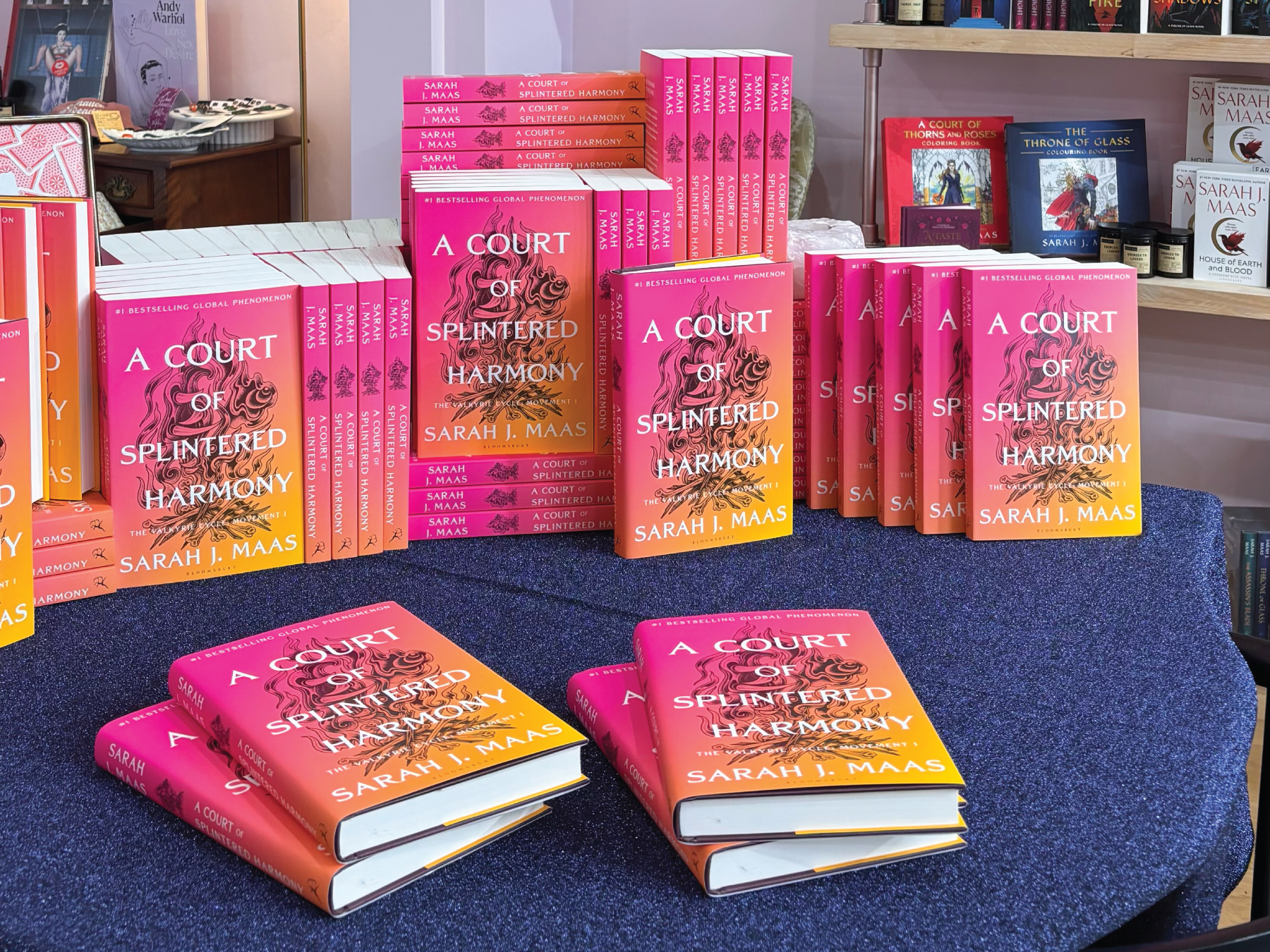
The release of Sarah J. Maas’s A Court of Splintered Harmony has brought a longstanding problem in New Zealand’s book industry into sharp focus: a distribution system that is increasingly difficult for independent bookshops to navigate, and one that can leave them at a significant disadvantage to larger retailers.
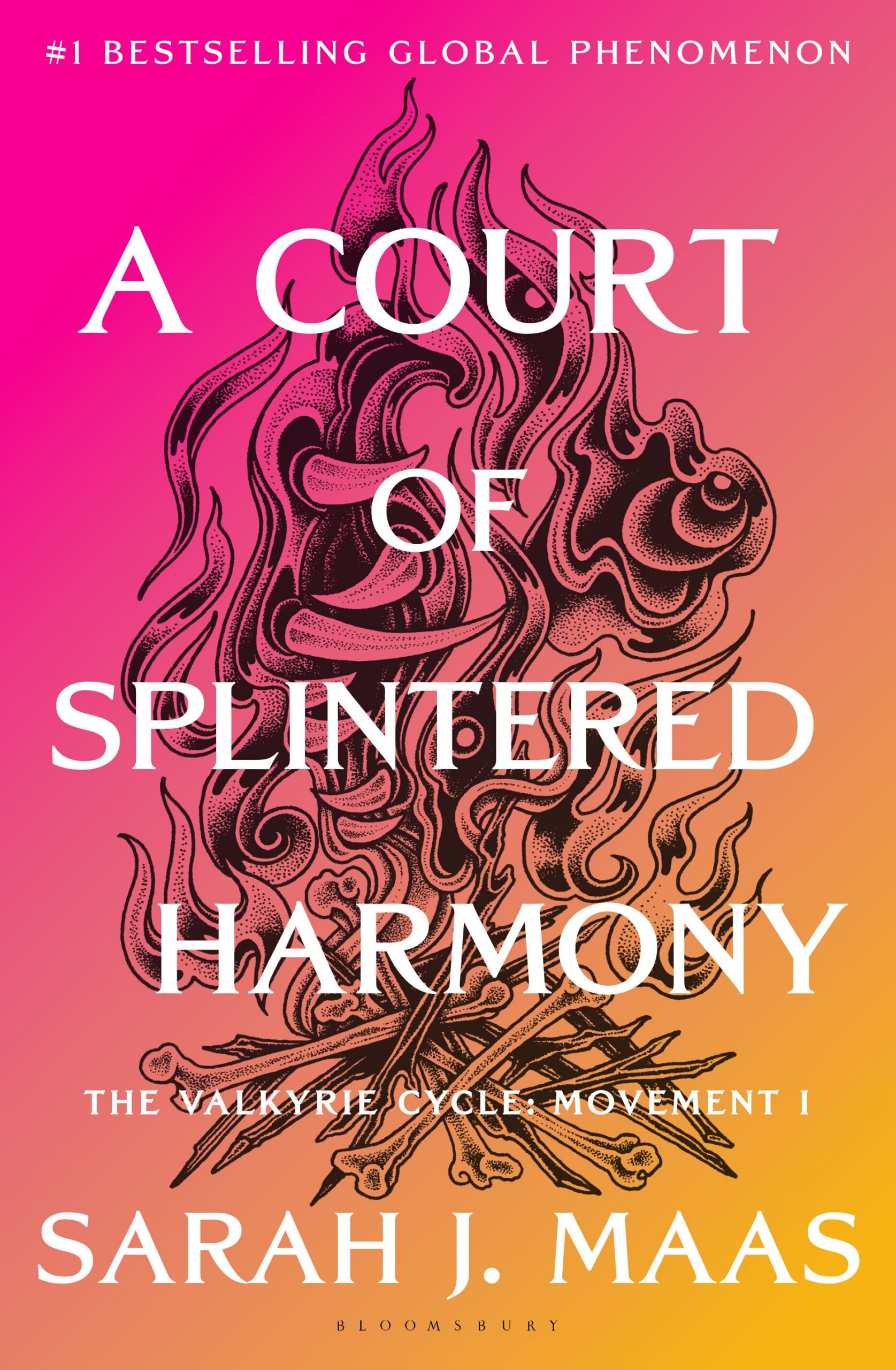
On Tuesday, 27 October, one of the most highly anticipated books of the year was released worldwide. For many independent bookshops across Aotearoa New Zealand, what should have been one of their biggest trading days instead became an exercise in damage control. Despite ordering months in advance, adhering to strict publication embargoes and organising launch events, many were left without copies of Sarah J. Maas’s A Court of Splintered Harmony. Meanwhile, major retailers had received their stock the previous week, allowing them to fulfil pre-orders and host midnight release parties.
In response, Booksellers Aotearoa NZ published an open letter to Bloomsbury Australia and Penguin Random House Distribution, signed by more than 40 bookshops, calling for fairer distribution practices. But while this particular release has brought the issue into the spotlight, the problems facing New Zealand booksellers are far from new.
Our book industry is heavily reliant on Australia for its supply, with much of the stock destined for our shelves travelling across the Tasman by sea. During the COVID-19 pandemic, distributors increasingly shifted away from air freight in favour of sea freight, and those arrangements were never fully reversed. Air freight is now largely only available at the bookseller’s own expense. While sea freight is considerably cheaper, it is also significantly slower, leaving bookshops with longer lead times and far less flexibility when responding to customer demand.
A book might suddenly take off on social media, an author might win a big prize, or a title might receive an unexpected surge in attention. Where a bookseller might once have been able to replenish stock relatively quickly (roughly 7 days), they can now face a considerably longer wait (4-6 weeks, if the title is in stock). For smaller retailers operating with limited storage space, tight cash flow and a finite budget for stock, anticipating what customers will want weeks in advance is no small task.
And while these issues affect the wider industry, their impact is particularly acute for independent retailers, who don’t have the same purchasing power, distribution arrangements or financial resources as the major chains.
What makes the latest Sarah J. Maas release particularly frustrating is that getting books into New Zealand ahead of publication day was clearly achievable. Major retailers classified as distribution centres received their copies in time, while independent bookshops, despite requesting earlier deliveries in anticipation of Monday’s public holiday, were not afforded the same opportunity.
It’s important here to distinguish between those selling books to independent bookshops and those responsible for distributing them. In New Zealand, Allen & Unwin represents and sells Bloomsbury titles, but the distribution arrangements for this release were the responsibility of Bloomsbury and Penguin Random House Distribution. Allen & Unwin’s sales representatives went above and beyond to help, with accounts of reps driving considerable distances to source copies from other retailers and personally delivering books to shops desperate to fulfil pre-orders. Their efforts deserve recognition, but it’s extraordinary that individual sales representatives were left trying to resolve a distribution failure of this scale.
For independent bookshops, major releases represent an enormous commercial opportunity. When stock doesn’t arrive, booksellers lose sales to competitors, customers cancel pre-orders, launch events are disrupted and trust is eroded. The open letter highlights how some stores had committed to ordering 96 copies, to qualify for promotional party packs, taking on considerable financial risk in anticipation of the release.
And when customers can walk into a major retailer and purchase a book their local independent shop cannot supply, often at a price that independents cannot offer, it’s not difficult to understand why they might think twice about placing their next pre-order with a smaller business.
This isn’t an isolated incident, either. Just last month, independent bookshops across the UK faced a remarkably similar situation with the release of Rebecca Yarros’s Threshing Day. Publisher Little, Brown issued an apology after distribution delays left independent booksellers without copies on publication day, despite orders having been placed months in advance. Meanwhile, larger retailers had stock available, with reports of some books appearing on shelves before the official release date, in breach of the embargo. Proving that distribution favouriting larger retailers is a global issue. Further highlighting how distribution practices favour larger retailers, not just in New Zealand but globally.
Highly anticipated releases are often subject to strict publication embargoes, which independent bookshops are required to sign and adhere to, just like major retailers. But those agreements mean little when some retailers receive their stock in time for release day while others are left waiting. As the Booksellers Aotearoa NZ letter points out, “An embargo only works if everyone starts from the same line. Right now, they don’t.”
The open letter calls for guaranteed delivery windows, equal priority in stock allocation, earlier communication about delays and greater accountability from publishers and distributors, with Bloomsbury representatives invited to meet by the end of November. Of course, distributing books to New Zealand is not without its challenges. Freight costs are substantial, delays are sometimes unavoidable and publishers and distributors operate within their own commercial constraints. But there is an important distinction between a system that struggles to deliver books on time and one in which some retailers appear to receive preferential treatment.
Independent bookshops are already competing against major chains and online retailers offering significantly deeper discounts. Reliable access to stock should not be another competitive disadvantage.
And while most stores now have their stock, there are a number of stores still patiently waiting. so, a little plea to readers. If you’ve pre-ordered A Court of Splintered Harmony through an independent bookshop, please hang tight. These delays are entirely out of the booksellers’ hands, and cancellations can be incredibly costly for small businesses that have already committed to purchasing stock specifically for their customers.
And if you haven’t ordered a copy yet, but aren’t planning to read it in the next couple of days, consider waiting and buying it from your local independent bookshop instead. These are the businesses championing local authors, introducing readers to books they might otherwise never discover and supporting our literary communities. But to continue doing all of that, they need a distribution system that gives them a fair opportunity to compete.
Photo credit: Enamoured Books















Leave a Reply
You must be logged in to post a comment.