
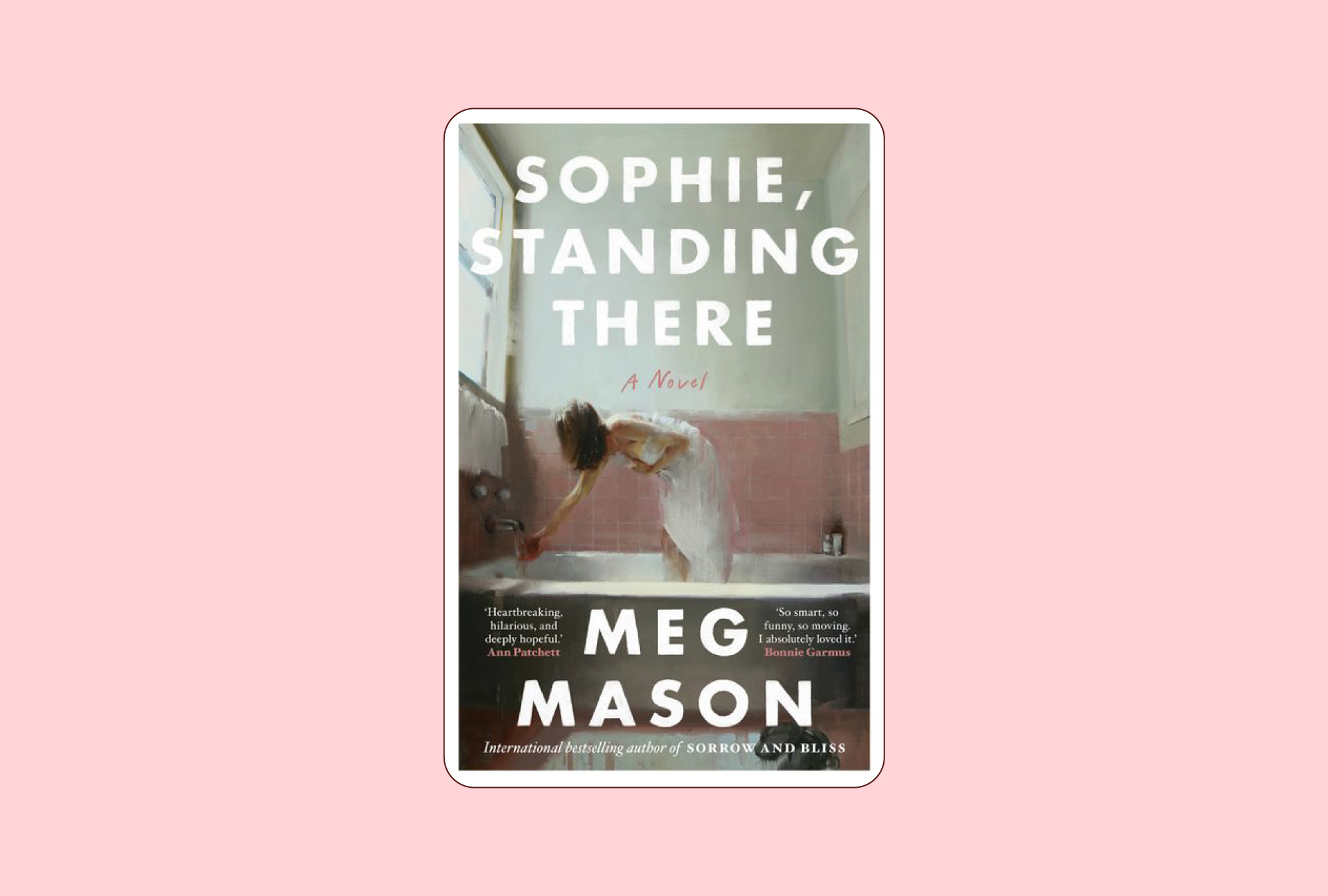
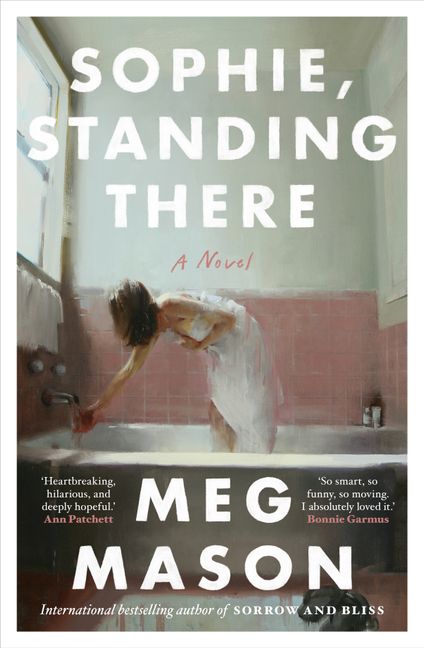
Following on from Sorrow and Bliss, Meg Mason is back, and Sophie, Standing There has to be one of the most anticipated novels of 2026.
Sophie is a freelance sound technician who works at literary festivals. She’s also a voracious reader, although she came to books later in life and has spent every moment since making up for lost time. She’s navigating the end of her marriage to her still-husband Paul, feeling increasingly disconnected from her best friend Emma, and relying on the steady presence of her older brother Laurie. But mostly, Sophie is lonely.
Sophie, Standing There is both a celebration and an examination of the literary world. Independent bookshops, literary festivals, readers, famous authors (hi, Ann Patchett, David Sedaris, and Bonnie Garmus), ARCs, BookTok, festival green rooms, podcast interviews, and the chaotic ecosystem that surrounds books all feature prominently.
Sophie’s local independent bookshop, Chapter & Verse, is a personal haven, where booksellers Rob and Cass hand her cups of tea, pass on advance reading copies and, perhaps most realistically of all, share the latest literary gossip. (Because if there’s one thing this industry loves almost as much as books, it’s gossip.) The novel is filled with these wonderfully observant insider moments, including one where a reader proudly tells a famous author she’s borrowed all of her books from the library, only for the author to reply, “Thanks, but I would prefer you bought them.”
Sophie’s favourite writer is the charismatic Lilac Dunne. She has read every one of her books, multiple times, listened to every podcast interview, multiple times, and, in the loneliness of her own life, has begun carrying on conversations with Lilac in her head. So when Elizabeth Strout pulls out of the literary festival at the last minute and Lilac is announced as her replacement, Sophie suddenly finds herself face to face with the person she’s built such a profound one-sided relationship with.
Here the novel really begins its exploration of parasocial relationships. What does it mean to feel like you know an author who has no idea you exist? What expectations do readers place on writers? How much of the person behind the work do we really know? And if you did get the chance to meet them, would you want them to know you back?
By exploring these ideas through someone who feels invisible behind the scenes, rather than through the famous author herself, we are given an observer’s view of the literary world in all its complexity, while Lilac Dunne remains elusive and ultimately unknowable, and that ambiguity allows readers to draw their own conclusions about who she really is.
It’s impossible to read this and not think about Mason’s own experience over the past six years. Whether intentionally autobiographical or not, Sophie, Standing There feels like a novel that could only have been written after her whirlwind introduction to the literary world following the extraordinary success of Sorrow and Bliss. That perspective gives the novel an authenticity that makes every festival, bookshop and backstage conversation feel lived rather than imagined.
Yet for all its observations about books and the people who love them, this novel is ultimately Sophie’s story. Through her childhood, her family, the breakdown of her marriage, and the accumulation of heartbreaking experiences that have left her profoundly isolated, Mason crafts a deeply compassionate portrait of loneliness, belonging, and the difference between the connections we imagine and the ones waiting for us in the real world.
And while this now feels a little ironic to admit, given all of the above, I’ve found myself thinking about this novel constantly since I finished it.












Leave a Reply
You must be logged in to post a comment.