
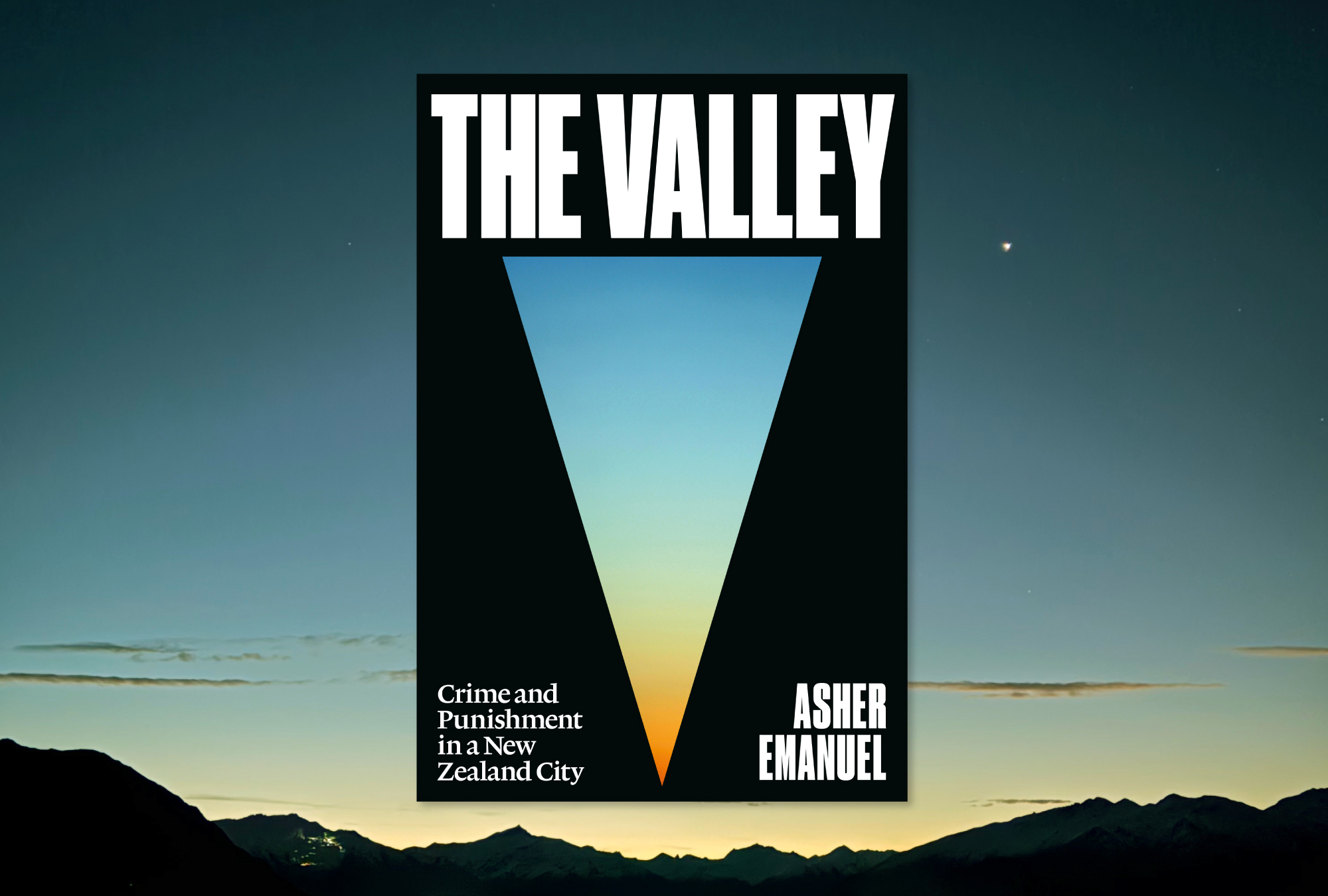
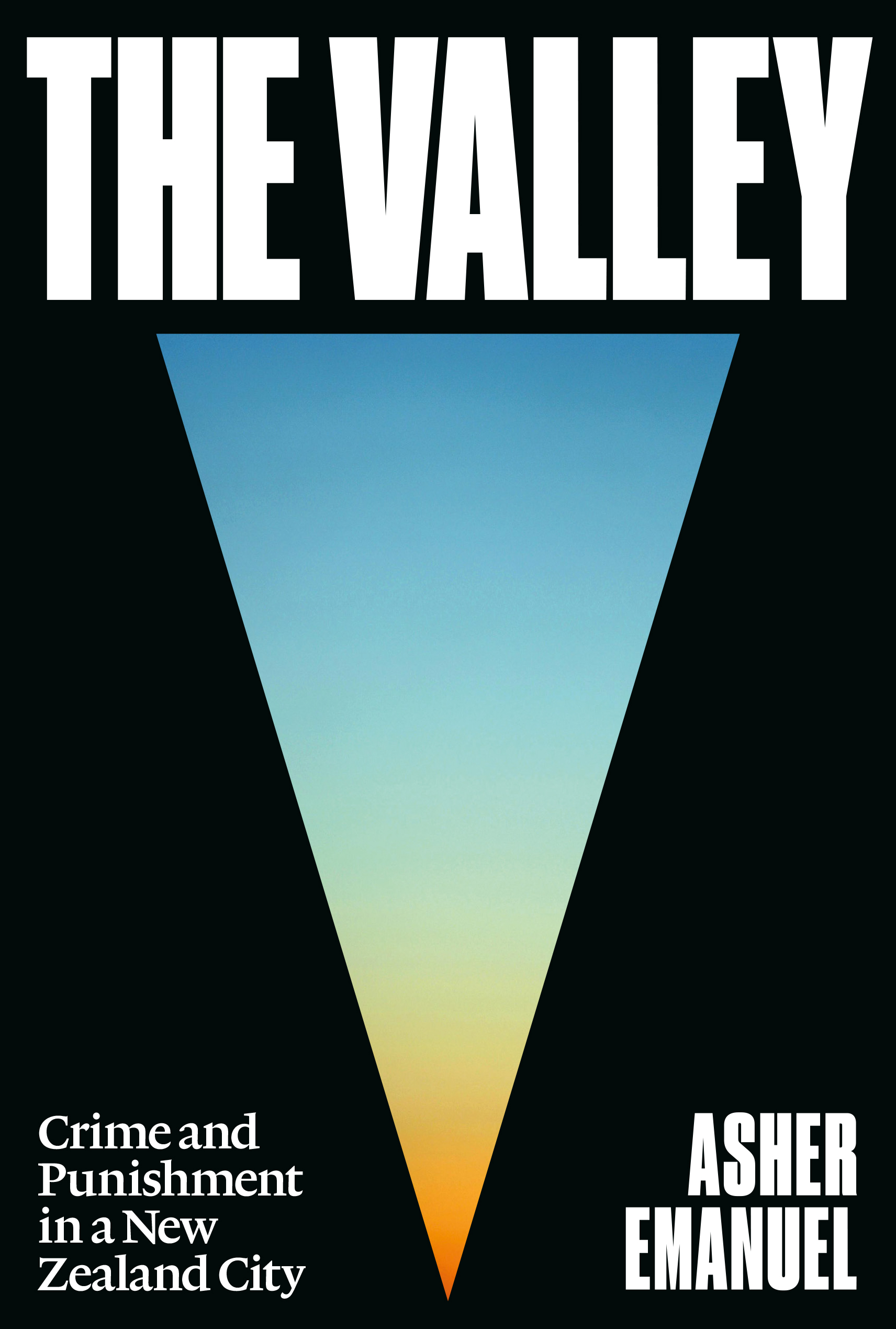
Asher Emanuel has arrived on the New Zealand literary scene with a bang, delivering what is undoubtedly one of the most important books of our time. The Valley is an in-depth examination of New Zealand’s criminal justice system, centred largely on legal aid lawyer Lewis Skerret and repeat offenders Rikihana Wallis and Nathan Morley.
What makes The Valley so powerful isn’t the crimes themselves, which are often unremarkable, but the people at its centre. Emanuel writes with enormous compassion and humanity, and before long you find yourself desperately hoping for a better outcome for everyone involved.
The book lays bare the way untreated mental illness, addiction, poverty and wider systemic failures intersect with the justice system. It is clear that the system is filled with people doing the best they can with the limited resources available to them, yet the problems are so deeply entrenched that meaningful change feels frustratingly out of reach.
Although nonfiction, it is written in the style of narrative nonfiction, making it every bit as compelling and difficult to put down as a novel. If you’ve enjoyed the work of Patrick Radden Keefe, this should absolutely be on your reading list.
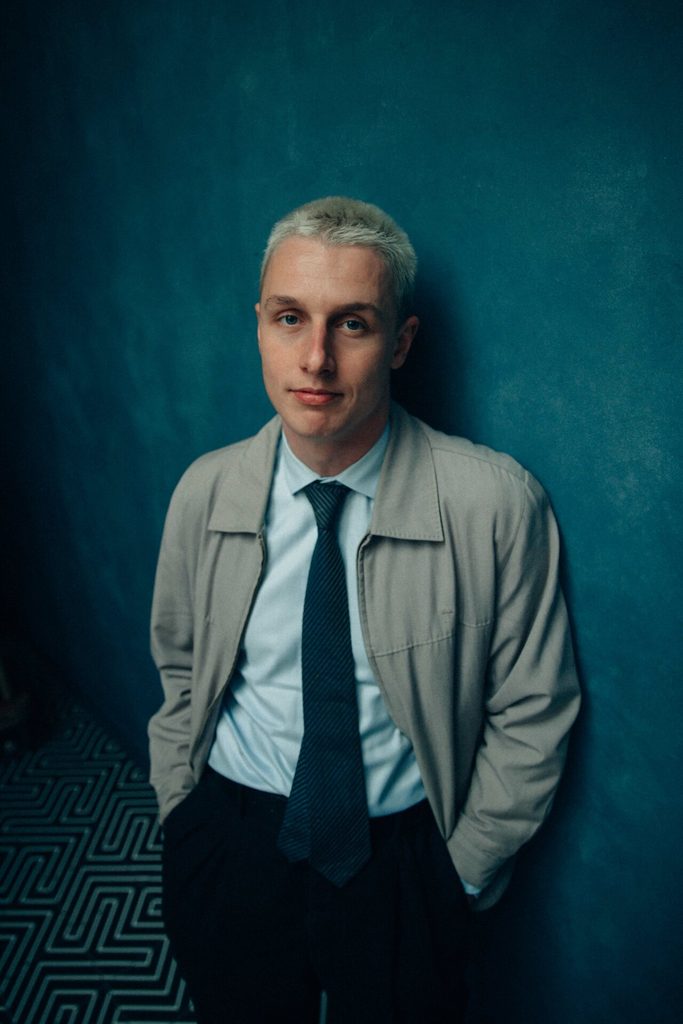
Drawing on his own experience as a civil legal aid lawyer, Emanuel has written an urgent, compassionate and profoundly important book that deserves to be widely read.
The Valley took eight years to go from conception to the bookshelf. That must have required incredible dedication and patience. What kept you going?
It has been up and down, and many different feelings have driven me at different points over the years. At times, sheer rage at the state of things in the lives of the people who the book follows. There was also fear and shame at the prospect of not finishing – at one point I felt too depressed to go on, and asked my girlfriend if people would be okay if I didn’t complete the book (she told me, gently, that I would regret it). And even joy at the feeling the story was working, in the sense that it was getting at something which felt to me deeply true about the nearly two years I spent following the lives of Nathan, Rikihana and Lewis. But the very best advice I got was that it could only ever be done one day at a time.
The book explores the ordinary realities of the justice system rather than the sensationalised cases that so often dominate the media. At a time when audiences seem increasingly drawn to stories of extraordinary crimes, what do you make of the rise in our fascination with true crime? And why was it important to you to tell this story instead?
The commercial content economy demands attention, and sensational stories, among them a lot of the true crime genre, are reliable getters of attention. The problem is that these stories, true as they may be, are simply not representative of most of the cases going through our criminal justice system, and so this content economy produces an inaccurate picture of what’s taking place in the criminal justice system. The Valley is working against that dynamic. It’s a book about the actual reality of daily life in the criminal justice system, and the kind of cases and lives which don’t get covered in the news. That story is very important because it helps us get a better sense of what’s actually happening in our community.
One of the things the book makes painfully clear is how often the justice system ends up responding to the consequences of failures in our wider support systems. What do you think needs to change to stop the justice system becoming the ambulance at the bottom of the cliff?
At one point in the book, a lawyer who’s been working in the system for most of her adult life, reflects, in frustration, ‘It’s not rocket science.’ For her, ‘It was completely fucking obvious — come here, put the resources in.’ She meant in the lives of the people who were coming through the courts. Of course, achieving that involves, I think, big political conflict over the distribution of resources in our country, and so in the end it is a political problem that requires a political solution.
After years of witnessing the human cost of these systemic failures, how do you avoid becoming disillusioned? Do you believe meaningful change is still possible?
Pessimism of the intellect, optimism of the will, as the saying goes. Though it is mainly narrative, in the concluding chapters of The Valley I try to sketch the political and historical context to the changes in our criminal justice system that have, over the course of my lifetime and the lifetimes of Nathan and Rikihana, resulted in massive growth in the prison population. These changes are the result of political decisions; and different decisions can be made in future.
Writing so closely about real people’s lives carries an enormous responsibility, and you manage to do so with remarkable respect and sensitivity. What was your approach to telling these stories ethically?
I did all that I could to give those who appeared in the book an opportunity to see their parts ahead of publication, and considered any suggestions that arose. For Nathan and Rikihana, the main defendants in the book, that meant spending weeks together going over the manuscript. But still there is the irreducible responsibility of the author to decide what goes in, and what is left out. I felt I had to trust the reader to face the facts and reach humane and sensible judgements, and I have not so far been let down in that respect by any readers who I have had the privilege of hearing from.
How and when did the book begin to take the shape it has today? What led you to centre the narrative around Rikihana, Nathan and Lewis?
At one level, there was a narrative and historical unity to the trio – all born in the late 80s and early 90s at a time of huge political and economic change, and in the Hutt Valley, formerly a great industrial centre and a place very visibly transformed by that change. But on a more personal level, being of a similar age they had a rapport, and their relationships to one another work as a mirror in which they as individuals are revealed.
It must have been difficult to navigate forming close relationships. How did you manage the boundaries between building trust and maintaining professional distance?
Truly I just tried to do what was right in the moment. So sometimes I bought people food, gave money for a bus trip, or provided a lift home. It was important that I be honest about this involvement, but I was also committed to not being present in the main narrative, and so there are the endnotes which contain that other layer of what happened.
What was the hardest part about writing this book?
Doubt about each decision I faced. There were so many decisions to make along the way, and I shudder to think back on it all. Writing is a very lonely thing. I was well-supported by my publisher and editors and so on but in the end there is just you.
How have Rikihana, Nathan, and Lewis responded to the book?
In the chapter called ‘About the research’, I write about the process of checking the book with people, including Nathan and Rikihana. They made various remarks, which I have recorded there, but something they both commented on was what they saw as the book’s accuracy and insight.
What do you hope readers take away from The Valley?
I found the research and writing to be very clarifying as to the nature of the problem. I hope others will find come away with that same clarity for themselves.
What’s next for you, writing-wise?
I am fully engaged still with The Valley – speaking at events, talking with readers, and organising an audiobook version. But I know an idea will come along, eventually.
What books have you recently read and loved?
I recently revisited Aijaz Ahmad’s In Theory: Classes, Nations, Literatures recently and was awed all over again. I came across it in a second-hand bookshop maybe a decade ago and it’s had a big influence on me. In fiction, I am up to book twelve in Patrick O’Brian’s twenty-book historical novel cycle set in the Napoleonic wars, mainly aboard English men-of-war, following the lives of Captain Jack Aubrey and his particular friend Doctor Stephen Maturin – probably better known for the 2003 film adaptation, Master and Commander – books I started reading last year in search of escape from the final phases of editing The Valley. And over the summer just gone I was obsessed with Karl Ove Knausgård’s Morning Star books.
And finally, what is the one book you always find yourself recommending to others?
Wolf Hall. Hilary Mantel was a genius. And I find her early affiliation with socialist politics important in understanding her approach to this topic which, in lesser hands, might have been mere psychology, but under her command is instead a sweeping vision of both language and history and a vivid sketch of the twin birth of capitalism and the modern state. ‘So now get up.’















Leave a Reply
You must be logged in to post a comment.