

Aotearoa is known for its birds. The kiwi, kākāpō, kererū. They are beautiful and many are found nowhere else on Earth. But the same can be said of our fish, frogs, beetles, bats and beyond. Turn any stone here, even a literal one, and you will find ‘endemism’ – flora, fauna and fungi that live here and only here.
Aquamarine mushrooms, neon-green toadstools, baby pink waxcaps – these are also endemic. They first caught my eye over a decade ago, when I was an exchange student at the University of Otago, studying geology. The rocks I was surveying though weren’t changing on any time scale I could perceive. Everything around them though was. Frilly liches, tiny orchids, creeping mosses – these characters kept me entertained.
My Otago semester ended, and I returned home to Virginia, but kept crossing paths with my neighbour from Otago, a Kiwi guy, who was now living in the US. It took three years and a hurricane for us to both be in the same city, on the same weekend, and single. We dated until his visa ran out, a whole six months. I decided to follow him back to Te Waipounamu.
The move (on paper at least) did not make a whole tonne of sense. Once back here, I needed work, and picked up some freelance writing gigs. Mostly science and food related. On weekend tramps, I was enchanted by all the funky fungi once more, and spent a lot of time researching and writing about them on my Instagram.
Out of the blue, a publisher reached out. Would I want to write a book on the topic? Talk about a dream come true! I was stoked, but then they went with another writer. Womp Womp! I kept at it though, and a few years later found a publisher for my first book…
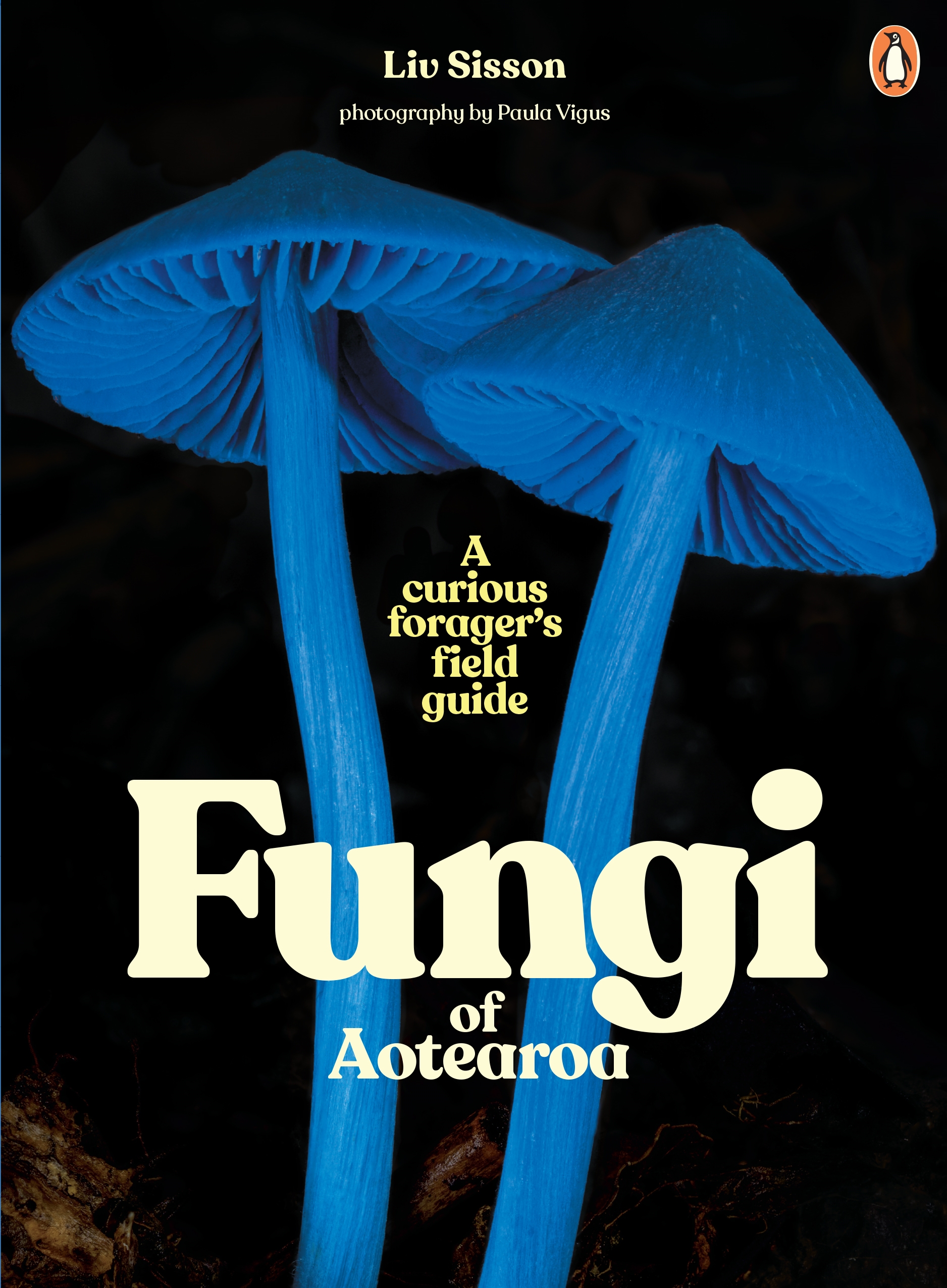
Fungi of Aotearoa is a curious forager’s field guide. It’s somewhere in-between a pocket ID book and a 101 textbook. In it you find out who these characters are, how they live, where to find them. You meet milkcaps, deathcaps and deceivers. It’s informative, but it’s fun. And there are loads of colourful pics too. It’s a journey down the rabbit hole with me as your curious guide.
The response to the fungi book was beyond my wildest dreams. It sold out and got shortlisted for an Ockham. What was I meant to do after that? I had another book idea, but it felt forced, so I binned it to focus on other stuff, like my new job at The Spinoff, my new city (Auckland), and a bucket list trip to the Peruvian Amazon.
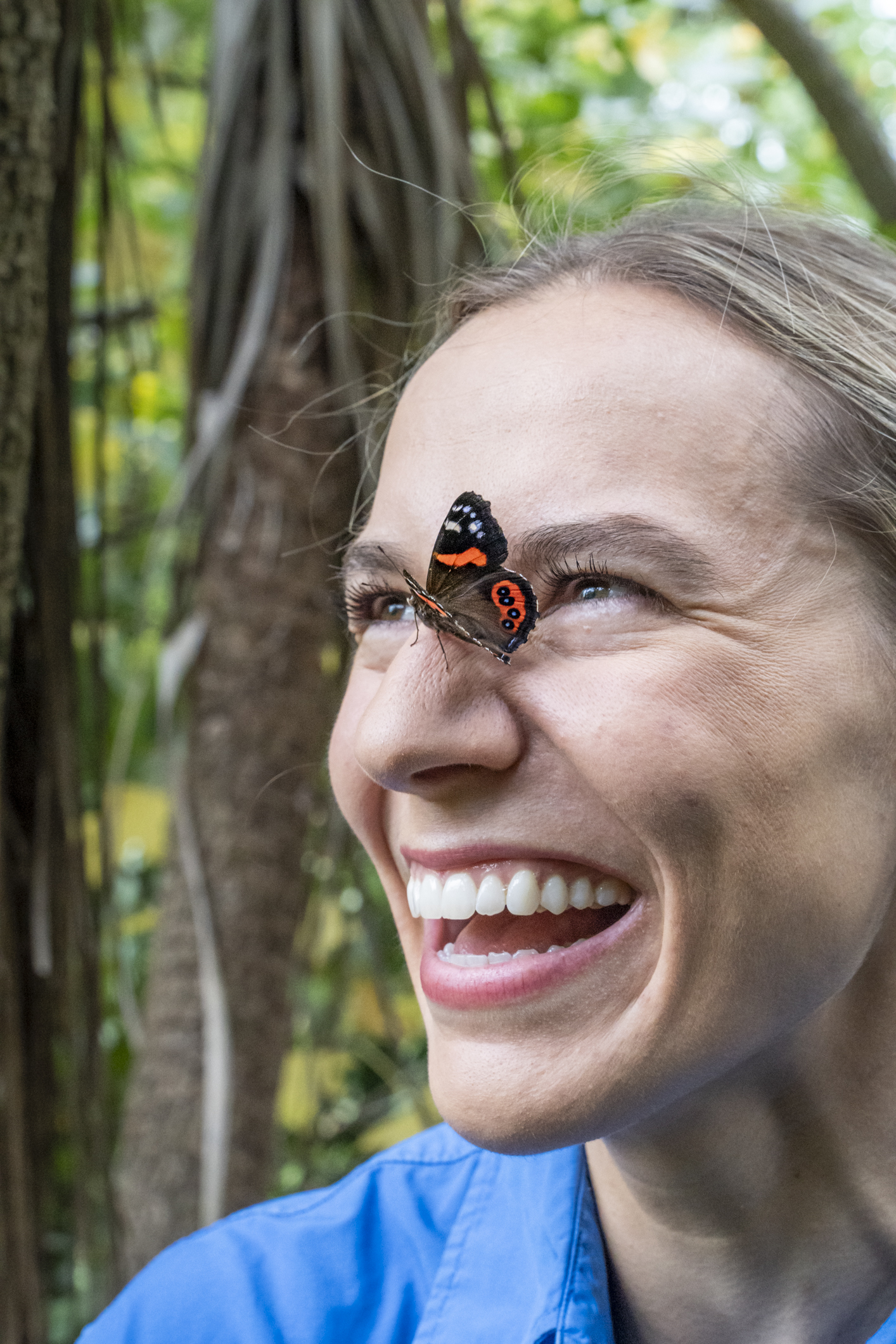
In the Amazon, I was amazed by the insect life. Lines of leafcutter ants kilometres long! Sleeping blue morpho butterflies! Beetles that were so reflective they looked made of metal! This trip reconnected me with my childhood insect fascination. One morning soon after I was sitting at home in Auckland, when a flash of red caught my eye through the window. I ran outside. It was kahukura – our red admiral butterfly – in the middle of the city! What other butterflies are here? I wondered. And that’s all part of my new book, ‘Butterflies and Moths of Aotearoa.’
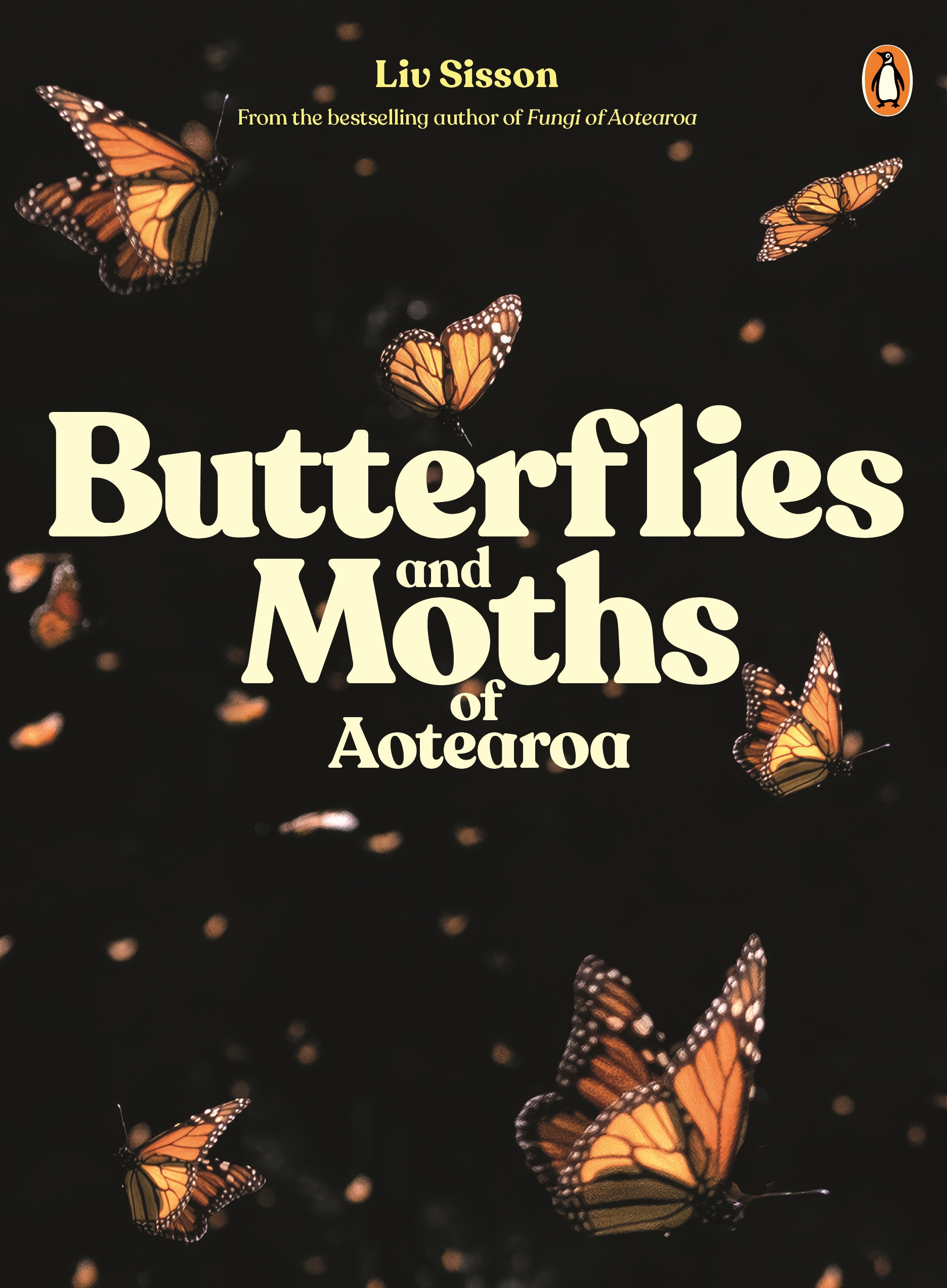
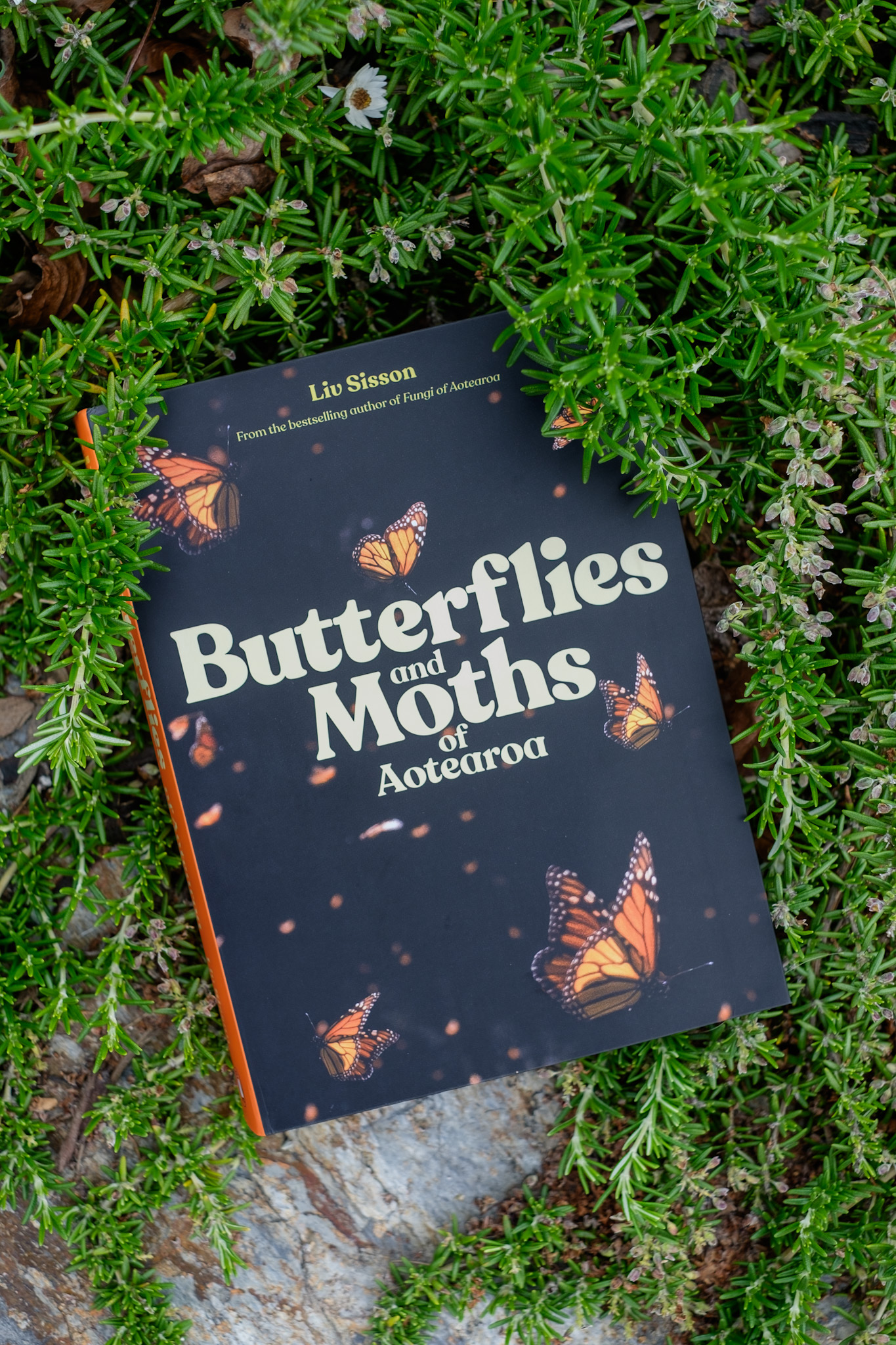
There are an estimated 2000 butterflies and moth species in Aotearoa and 90% are found nowhere else on Earth. We have a copper butterfly that flashes from orange to purple as the angle of light changes. We have a lime-green moth said to bring messages from the spirit realm. And another, thought to be extinct for the last 50+ years, was recently rediscovered outside the pub on Rakiura Stewart Island.
Their life cycle truly boggles the mind. They begin as an egg, hatch out as a caterpillar, eat heaps, go into a chrysalis, dissolve into a primordial goo, then emerge as a completely new animal but with the same DNA they had at the start. We still don’t know exactly how that all works.
Butterflies and moths are tiny. Most weigh less than a paperclip, and yet they have devised extremely elegant solutions for making life in this very big world. Monarchs, for one, use colour for defence. Their caterpillars eat poisonous milkweed plants, sequester the toxins, and pass them onto the adult. Baby birds quickly learn not to mess with them. Some species meanwhile have eye-like markings on their wings which they use to scare predators off. Others are masters of masquerade – the art of being seen but going unnoticed. They mimic leaves, lichen, twigs, berries, bird poo and more.
Now, how do these little critters perceive the world? They don’t see as well as we do, but they process visual information faster, which means they experience the world more slowly than us. This explains why it’s so hard to swat a fly, or net a butterfly. They can also see UV patterns on each other and flowers that we cannot. And their sense of smell? It’s more powerful than we can imagine. Moths use pheromone trails to find each other at night. Sometimes from kilometers away!
Butterflies and moths are also called ‘lepidoptera’ which means scale-winged in Greek. Their wings are covered in microscopic scales like shingles on a roof. The scales do not contain pigment, but are highly textured. When light hits the scales’ surface though some wavelengths are absorbed, others are refracted back to our eyes. This is what creates the alluring colours we associate with say, the monarch. It’s an example of ‘structural colour’. Structural colors are more enchanting to our visual neurons than pigment-based colours. This might help explain why humans have been so obsessed with butterflies since the beginning of time.
Moths, of course, don’t get nearly as much love. But to the moth haters, I say, give them a chance. The ones in these pages are truly GORGEOUS and they will not fly in your face. We have green, yellow, orange, pink, metallic, red, navy, mauve and mint coloured moths here. And they may be some of our most important pollinators. Aotearoa has very few native bee species – just 29 in comparison to 1500 in Aus – and as many of our native plants have small, white, night-opening flowers, there’s a good chance moths are doing a lot of the work.
Now, these incredible insects are actually all around us. 25% of all known species here have been observed in Auckland, our largest city. All you have to do to meet them is flick on the porch light, plant a few flowers, or most simply… open this book!
P.S The neighbour and I got married in June!












Leave a Reply
You must be logged in to post a comment.