


If Asher Emanuel wrote the most important book to come out of Aotearoa this year, Hector McKenzie has easily written the most surprisingly profound one. Xander Alexander has returned home for the first time in ten years after moving to London to become a model. His semi-famous actor girlfriend has bought him a ticket back to New Zealand as his modelling career begins to peter out, bringing him back to the family farm and a life he hasn’t really been part of for a decade.
This is the perfect millennial satire about growing up in small-town New Zealand, feeling the desperate need to get out, moving to a big city overseas, “experiencing things”, and eventually coming home, nostalgic for the youth and uncomplicated life you were once so determined to escape, only to realise that nothing stays the same just because you weren’t there to witness it. There is a perfect juxtaposition between affection for what it is to have grown up this way, and a complete understanding of how claustrophobic that same life can feel.
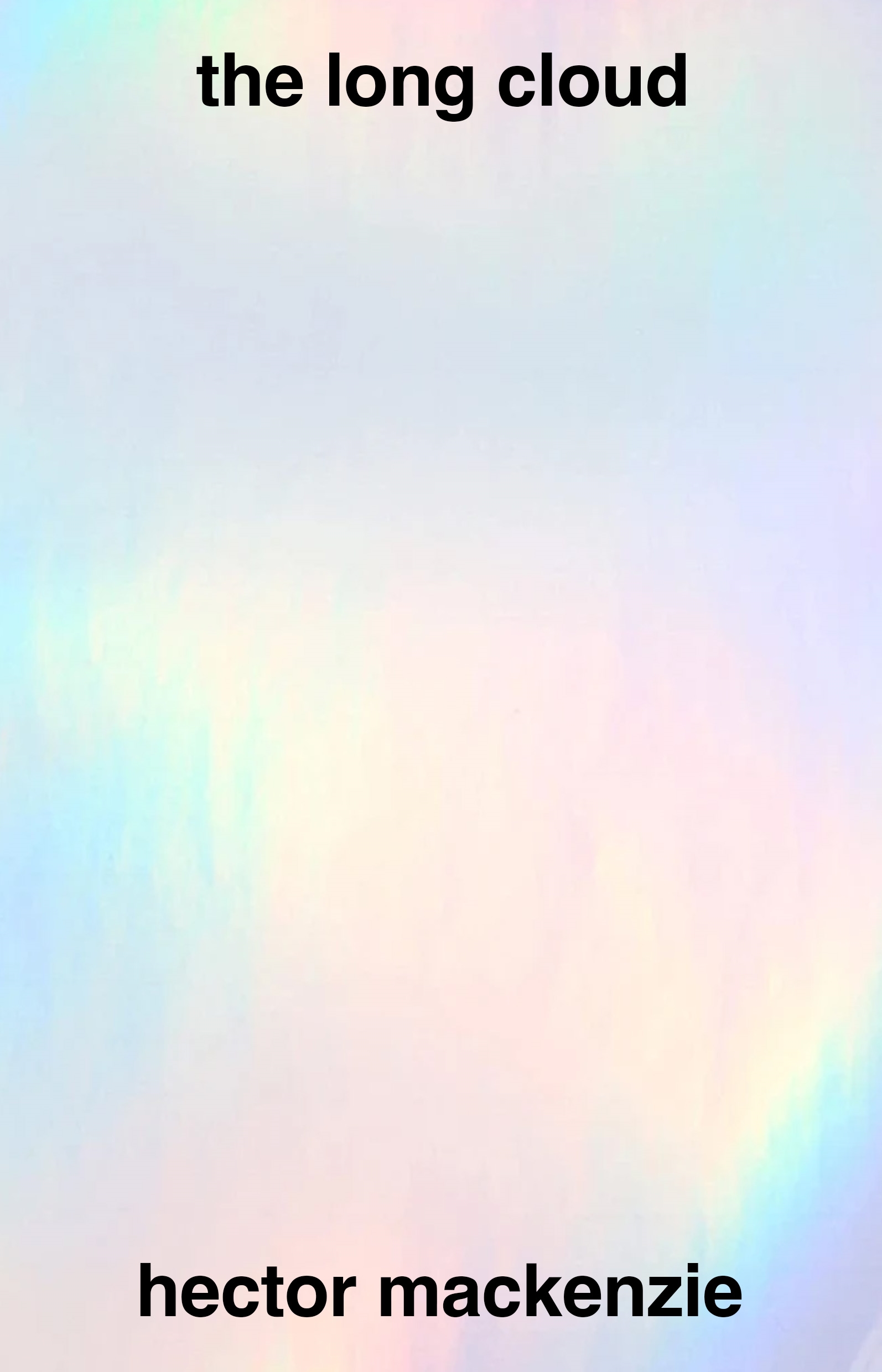
It only took me a few pages to become very fond of this confused pretty guy with a good heart who has arrived at a strange junction in his life and appears to be battling with his mental health. He has built an identity around youth and beauty just as both are beginning to lose their currency. There is an ennui to Xander that could feel self-indulgent in another character, but his extreme self-awareness puts him firmly into the category of easy to like, a testament to McKenzie getting the tone of the novel just right.
“i rolled the windows down and i let my hair fly in the wind and i felt free. if my physical home was among these rolling green hills then my emotional home was here among the fangs of paternal discontent and abandon.”
The continuous narrative of Xander’s trip home is broken up by short vignettes of his internal monologue, funny, fleeting and sometimes done in half a page. They take us into his past: his ex-girlfriend, losing his virginity, his old school mates, life as a jock, getting discovered as a model and the moment he knew it was time to leave.
“but i didnt feel bad because they broke my nose and i thought my modelling career was over. i ended up booking a big campaign because my black eye and bad ‘bad boy jock’ look and so i bought some more rounds of cigarettes and beers for the boys to keep everyone happy. but i knew it was time for me to move on after that. the vibe just wasn’t the same.”
The language is also so unmistakably Kiwi and steeped in satire. It is casual, colloquial, blunt and completely comfortable with understatement. There is no translating the New Zealandness of Xander for an outside audience, and no attempt to make his thoughts sound more literary than he would actually think them. McKenzie trusts the reader to understand what sits underneath the joke, and that perfect restraint is part of what makes the writing so good.
“some people are aesthetes and some people aren’t. and that’s ok. But some people think they’re aesthetes but aren’t and that’s not ok.”
If you’re a fan of Flight of the Conchords, I imagine the humour will hit just right for you. It is dry and understated. And can I just say that while we’re heading into an election, during a time of historic liquidations and unemployment, and I won’t list the rest, it is utterly refreshing to read something that reminds you how unique, and funny the Kiwi experience can be. It’s something I have been missing from local fiction since Rebecca K Reilly’s Greta & Valdin.
McKenzie also takes on a particular culture of New Zealand masculinity: the rugby, drinking, piss-taking, fighting and emotional evasiveness. From the outside, Xander appears to embody plenty of the familiar tropes as a former jock and farm boy, but underneath there is anxiety, insecurity, tenderness and a desire to follow the rules of this particular boyhood culture, even as he grapples with thoughts and feelings that don’t fit neatly within them.
Part of Xander’s coming home is beginning to see his parents as people for perhaps the first time, and to reflect on the experiences that have shaped them into who they’ve become. His father, an ageing and tired farm owner who knows he doesn’t have another drought season left in him, could embody every stereotype of the stoic Kiwi farmer, while his mum’s growing paranoia and hardened can-do attitude feel very much of a generation. But everyone in Xander’s life is treated with immense humanity, and for all its satire, the novel is never cruel towards its characters.
Every year I seem to stumble upon one bizarrely original, unconventional book that wasn’t even on my radar until I opened it and it goes on to become one of my absolute favourites of the year. In 2023 it was Shark Heart by Emily Habeck, in 2024 The Night Alphabet by Joelle Taylor, and last year it was Sky Daddy by Kate Folk. To me, these books, and the privilege of getting to read something genuinely unique in both concept and execution, are at the heart of the joy of being a reader. Thank you Hector McKenzie for writing my 2026 unexpected gem.
A warning, though: if you care deeply about grammar and quotation marks, this book may not be for you. If you’ve read that sentence and immediately decided not to read it, maybe read the review again? Because you’ll be missing out on something pretty special.















Leave a Reply
You must be logged in to post a comment.