

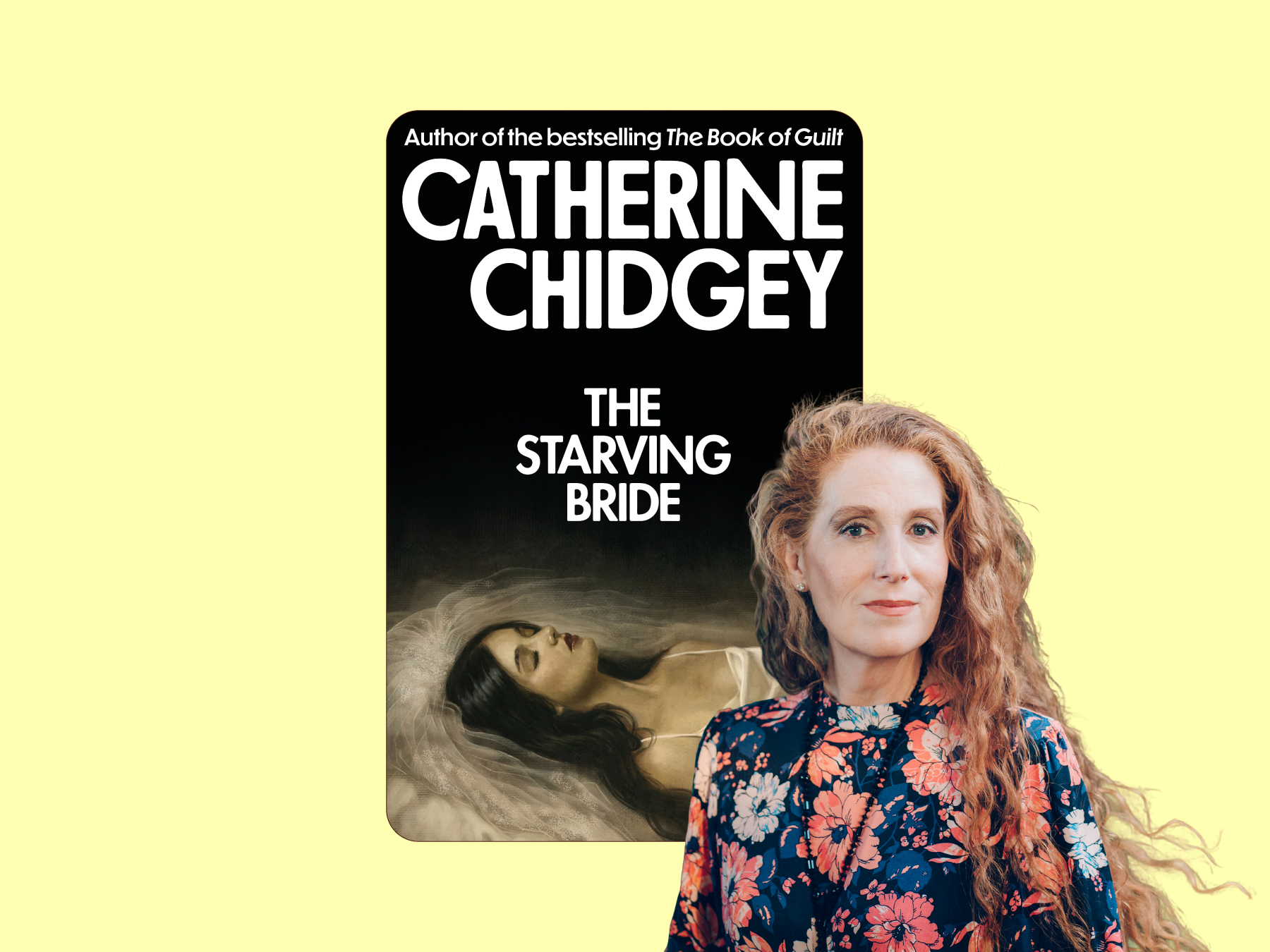
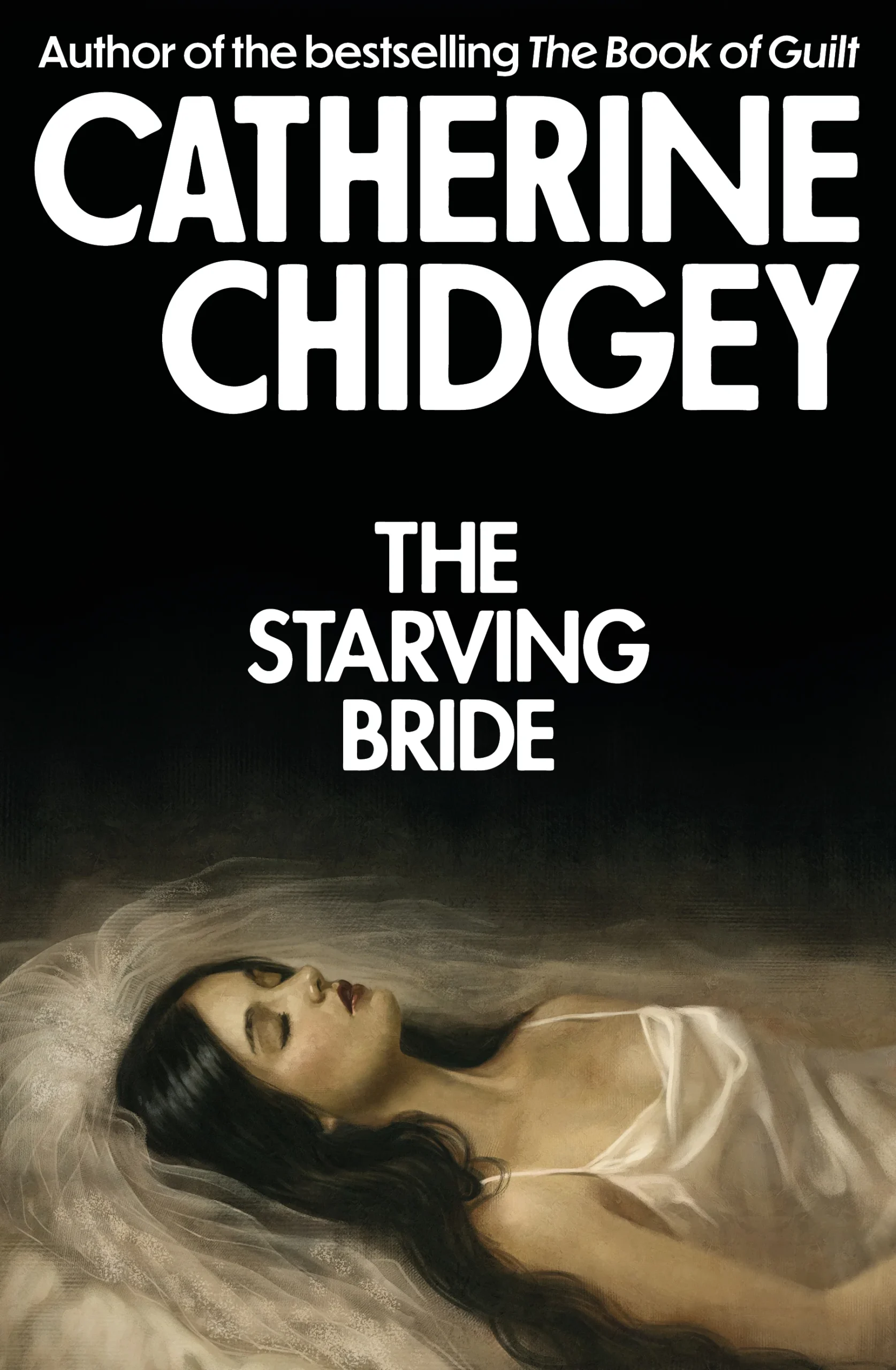
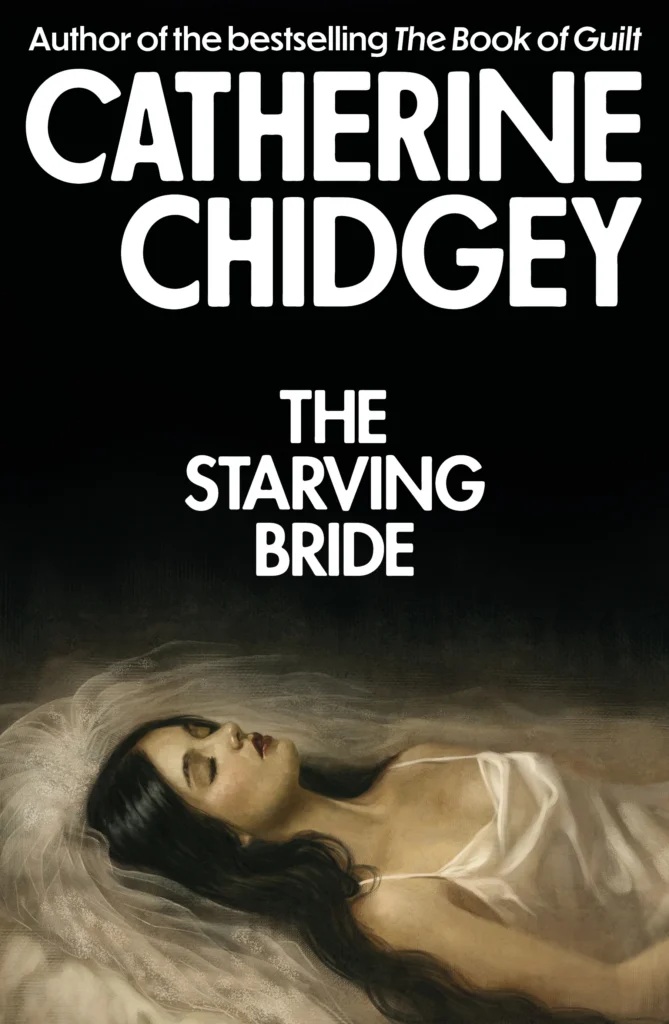
No surprises, Catherine Chidgey is back! And as always, we’re thrilled. In her latest novel, The Starving Bride, a woman is offered £40,000 to spend 40 days starving herself inside a glass coffin in a lion’s enclosure, while paying spectators gather to watch. It sounds like the stuff of dystopian fiction, and indeed, Chidgey’s latest novel is set in a near-future Blackpool, England. More unsettling still is the fact that the Starving Bride was a real attraction in the 1930s.
Performing the role of bride-to-be is Hazel, who, having recently been dumped by her boyfriend over a prior school incident that continues to resurface, and subsequently fired from her job at an almond factory for carving the almonds into tiny skulls, decides to up and follow her oldest friend Gilda to the circus. Gilda works as a dancer, and Hazel has ambitions of joining her on stage, but instead finds herself offered the unexpected role of the Starving Bride.
Amid the economic pressures of climate change and food shortages, Blackpool council launched the #ASimplerTime campaign in an effort to revive tourism, restoring the famous seafront and bringing back some of the attractions that once drew crowds to the promenade. Running alongside Hazel’s story is that of Frank, a local councillor and father to a young daughter, who finds himself increasingly concerned about the structural integrity of the famous tower housing the attraction. With early reports warning of its potential collapse deliberately covered up, Frank struggles to convince his colleagues to take the threat seriously.
The inspiration for the novel came from a moment when Chidgey’s young daughter came to her and said, “My thighs are fat.” It sparked an anger in Chidgey about the damaging beauty standards she herself had grown up with in the 1980s and 1990s, and how the internet and social media have since amplified those pressures for a new generation of girls.
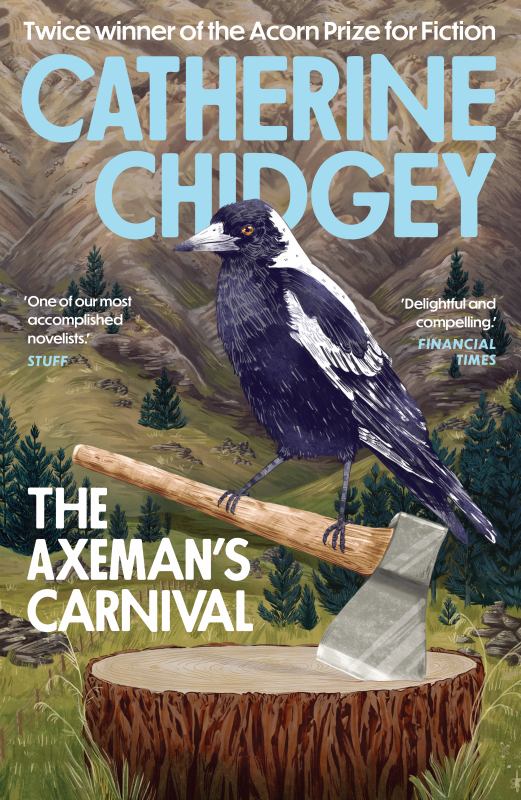
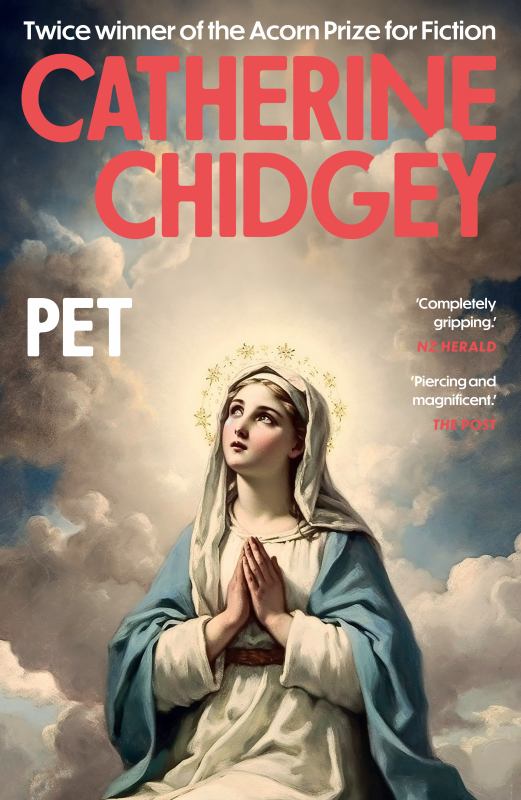
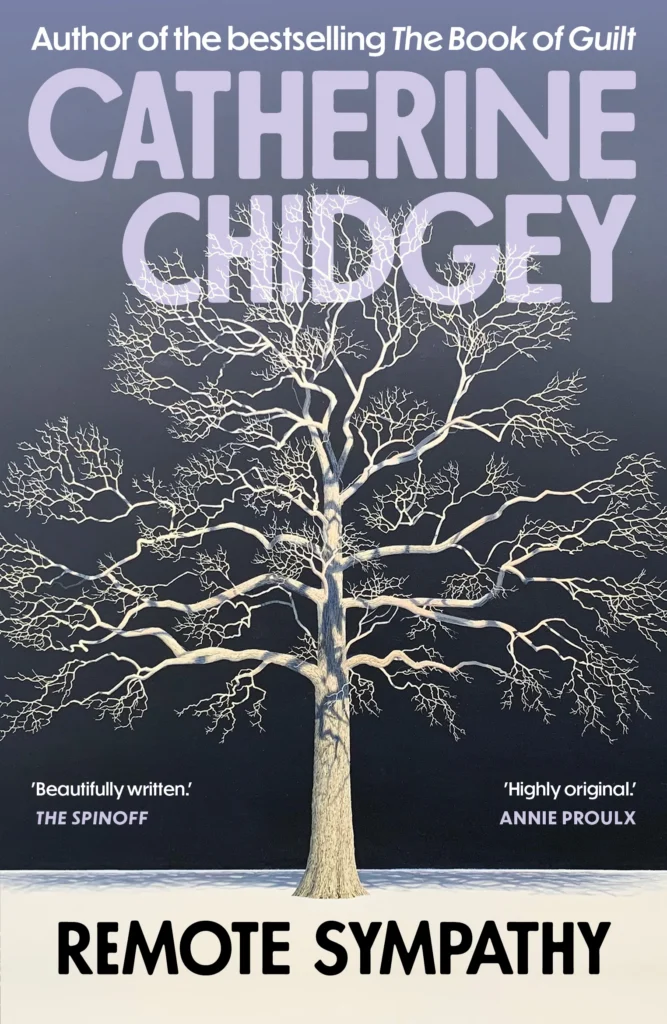
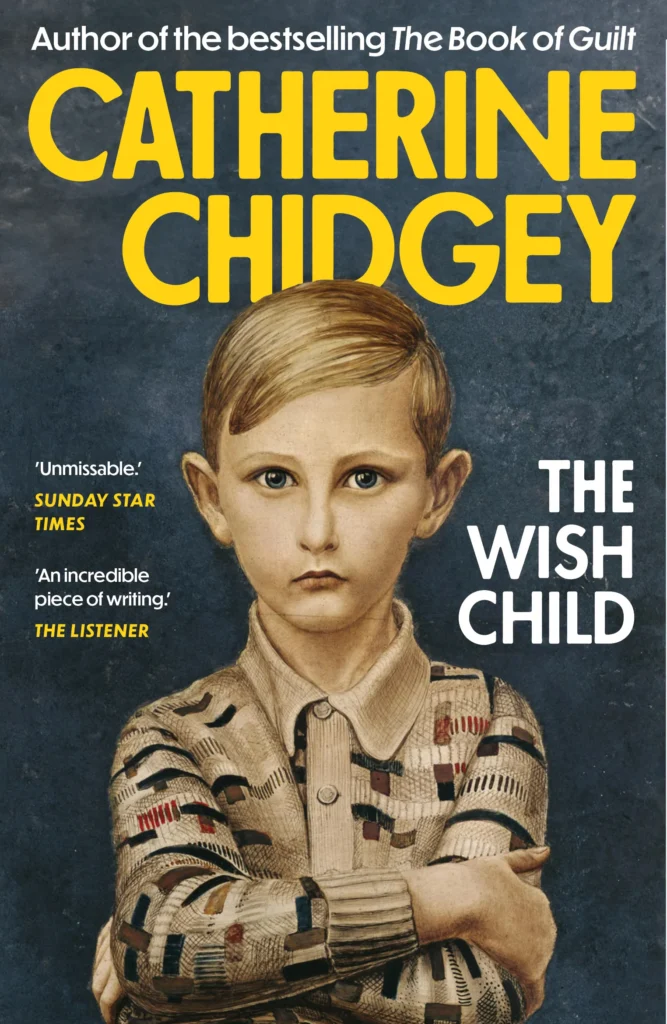
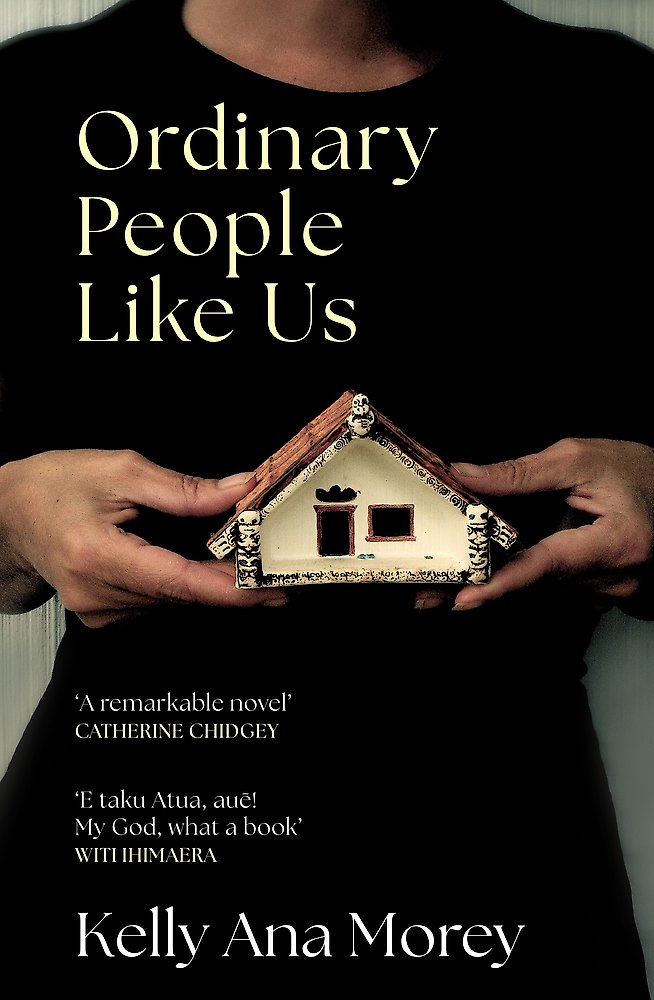
If there’s one word that’s become synonymous with Catherine Chidgey, it’s prolific. Since the publication of the Women’s Prize-longlisted Remote Sympathy (2020), she has given us the Ockham Prize-winning The Axeman’s Carnival (2022), the Ockham-longlisted Pet (2023) and the Ockham-shortlisted The Book of Guilt (2025). This year alone, she has helped bring her late friend Kelly Ana Morey’s final novel, Ordinary People Like Us, into the world, been named a 2026 Arts Foundation Te Tumu Toi Laureate and published The Starving Bride. And when we last caught up with her for an upcoming interview for Fashion Quarterly, she was at a writers’ residence in Canada. We asked what she attributed her formidable output to. Her answer? The fear that it might all dry up one day.


The Starving Bride has Chidgey’s signature all over it. The writing is vivacious, detailed and pacy. It is darkly funny, confronts some of society’s more uncomfortable truths and, of course, ends with a dramatic bang. All within just 230 pages. If you’re as unoriginal a Chidgey fan as we are, you won’t be disappointed.
But for all its familiar hallmarks, this feels in some ways, like a riskier book for Chidgey. Its subject matter is heavy, and the trigger warning is right there in the title. Disordered eating, body image and society’s obsession with thinness are notoriously difficult subjects to tackle in fiction. There is a fine line between exposing the damage caused by these cultural pressures and inadvertently reinforcing them, and books that venture into this territory can often prompt debate about where that line should be drawn.
The precision with which Chidgey captures Hazel’s inner world is particularly sticky. There is a specificity to her thoughts and behaviours that feels painfully authentic, particularly as what begins as an act gradually becomes Hazel’s reality. I think very few people could read this book and not recognise something of themselves in the relentless, critical inner voice, the casual criticism of what we eat, whether from others or ourselves, or the judgements made from afar. After all, we live in a society where bodies are still subjected to relentless scrutiny, whether in social media comment sections or everyday conversations. And while body positivity appeared to be gaining considerable cultural ground around 2020, the rise of weight-loss drugs seems to have granted permission for a renewed obsession with thinness. It’s hard not to see the irony in the fact that an attraction from the 1930s could so easily be transplanted into our near future.
But the most interesting question the novel raises is that of our own complicity. Throughout the story, there are references to America’s Next Top Model, watched by millions across its 24 seasons, long before the show and its treatment of contestants came under considerable public scrutiny. Meanwhile, crowds pack out the circus day after day to watch Hazel slowly disappear before their eyes, a spectacle that can only exist because people are willing to pay to watch it.
And when it comes to that fine line, Chidgey’s stories remind us time and again that one of the purposes of fiction is to challenge us, to hold a mirror up to society and encourage us to examine our own beliefs and behaviours. The Starving Bride asks uncomfortable questions about the entertainment we consume, the role we have played as viewers in perpetuating harmful beauty standards, whether consciously or otherwise, and, most uncomfortably of all, whether we would stop to watch if a Starving Bride appeared in our own town.
Which is precisely why Frank, despite having only a handful of slim chapters, plays such a pivotal role in the novel. While Hazel’s story forces us to reckon with a rather bleak take on society, Frank offers a welcome counterpoint and a reminder that we could all do with being a bit more, quite literally, frank.
As always, we’ll be eagerly awaiting whatever Chidgey writes next, and given her recent output, hopefully we won’t have too long to wait.
If you or someone you know is struggling with disordered eating, you can contact EDANZ in New Zealand or the Butterfly Foundation in Australia for information, support and guidance.











Leave a Reply
You must be logged in to post a comment.