Last week I went to see author Tom Baragwanath speak about his literary crime stories set here in the Wairarapa. Tom was raised in Masterton but, for most of the past decade, has lived with his wife in Paris. About 20 minutes in, an inevitable author-talk question was raised: what is your writing process? This question is almost always an indirect way of asking, how do you come up with ideas? At this point, along with the majority of non-writers in the room I gently roll my eyes and hoped that the author has anticipated the question and arrived with an unexpected answer tucked up their sleeve.
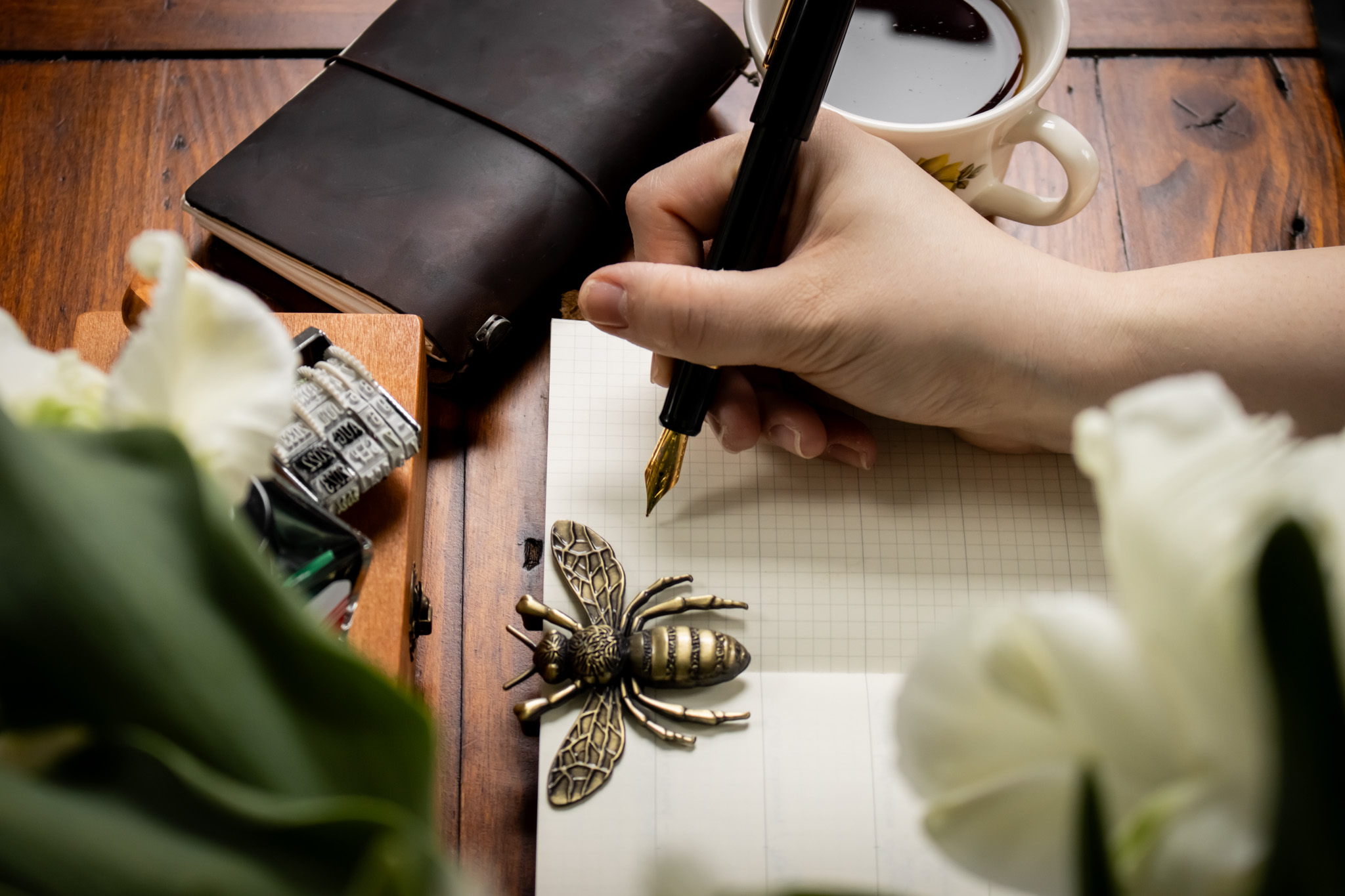
Tom sidestepped the question gracefully to share this dreamy vignette: his favourite cafés in Paris are laptop-free so he takes pen and paper and works on his novel in longhand. Before you think this sounds a little unrelatable, Tom also works four days a week and Wednesdays are his one day a week for writing. Weekends are family time, so he protects Wednesdays and completely commits to his writing.
Now, as a non-creative writer, I’m taking a bit of a mental leap here from Tom’s work on his novel to my own journal, where I’m simply getting stuff out of my head. Writing my thoughts down changes their shape. A vague feeling of there being so much to do often becomes a list of five actual things I can do. A half-formed idea becomes a paragraph I might use later as the basis of an Instagram caption. And very often, the things that felt enormous in my head are actually quite manageable once I’m forced to put them down on a page. Writing things down doesn’t necessarily solve the problem, but committing something to paper makes life’s complexities more visible and therefore more workable.
When I started this little article, naturally I brainstormed topics that might lead me towards the commercially relevant subject of the notebooks. But in the intervening days since Tom’s talk, and after listening to some AI-doom podcasts, I scrapped my original contribution in favour of this simpler thought:
Writing things by hand, with a pen (or pencil) and paper, is actually one of the few remaining places where we can have original thoughts.
A pen on paper is not a demanding inbox, usually full of other people’s priorities. It’s not a hot take from your media platform of choice. It’s not more input. Writing things down – whether a creative project or your own life admin – is a calm and surprisingly powerful way to organise your mind, because it creates some space between what is happening around you and what you actually think about it.
As Joan Didion is so famously paraphrased as having said, “I don’t know what I think until I write it down” feels more relevant than ever. If you too would like to think on paper for a while, these are a few of my favourite notebooks, each one of which will look as chic at a laptop-free Parisian café as it does in that meeting room you reserve by the hour.
If you are looking for some suggestions, or wish to continue expanding your notebook collection, here is a list of favourite companions:
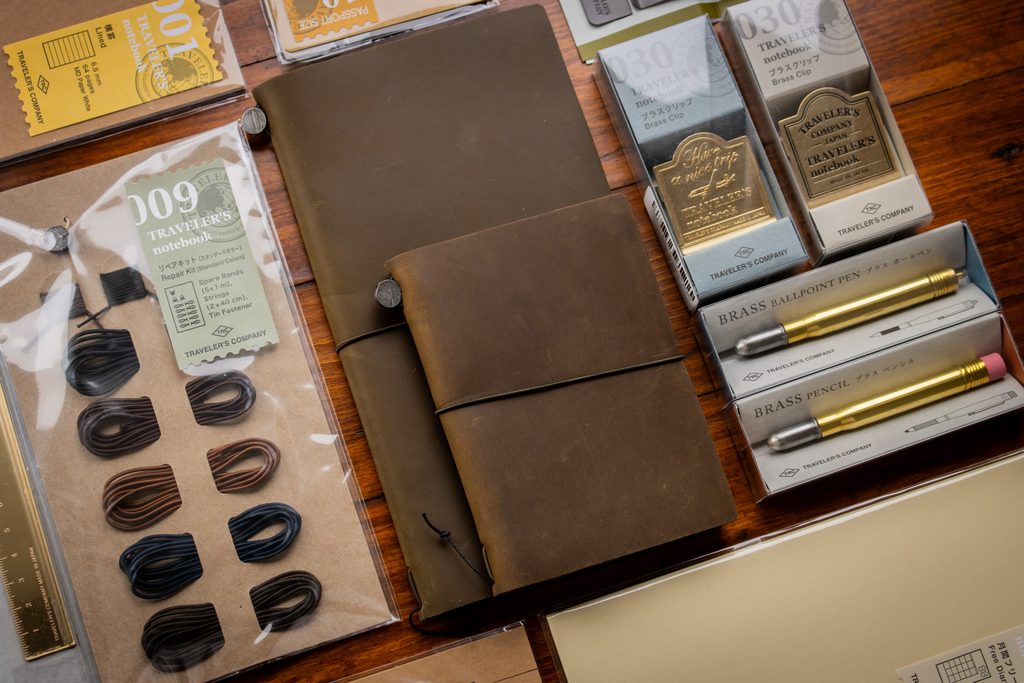
Traveler’s Notebook
The Traveler’s Notebook system from Japan consists of a simple leather cover and a customisable collection of replaceable inserts. You build a collection of 3-5 inserts that reflect your style. For example, you might include lined paper for journaling, a dated diary for appointments, and some dot grid paper for lists. As you fill each insert, you can replace it without replacing the whole notebook.
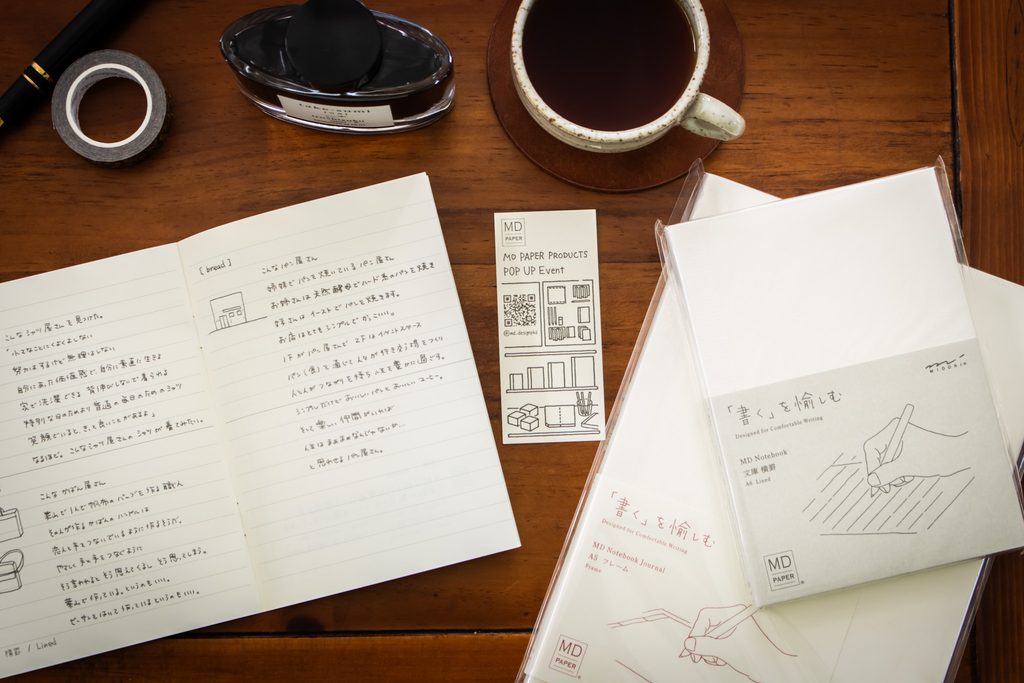
MD Paper
Also from Japan, MD Paper makes simple, understated notebooks that focus on the paper. Available in a range of sizes with either blank, lined, square-grid or dot-grid pages, they also lie perfectly flat which, is a small detail that makes a big difference if you’re writing regularly.
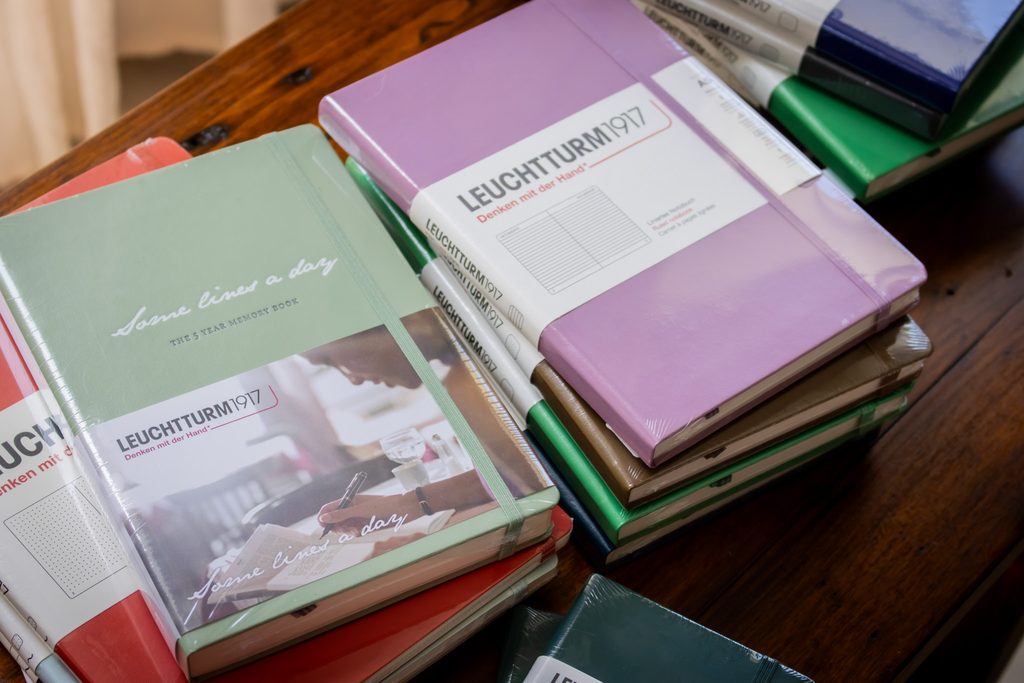
Leuchtturm
A German brand that started in 1917 producing stamp albums. They have a huge range of notebooks and formats and they’re popular with fountain pen enthusiasts due to the quality of their paper. Their classic A5 hardcover notebooks are a good place to start and there’s every chance they’ll have your favourite colour too.
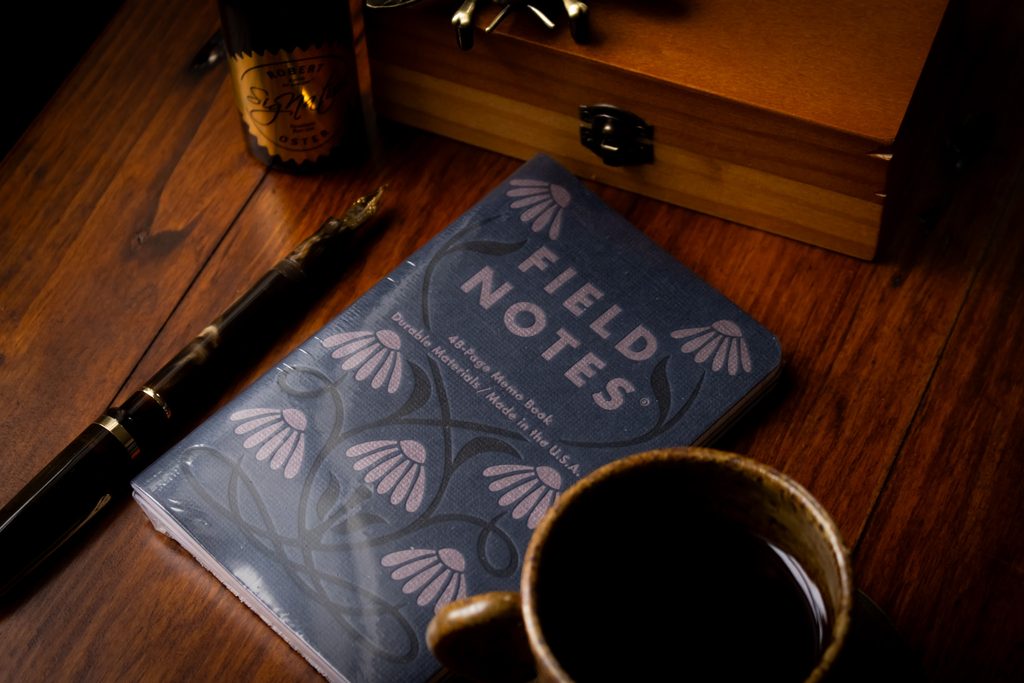
Field Notes
And for those who want something designed to fit in their pocket, this American brand is for you. If sitting at a desk feels too formal, keep a Field Notes in your bag so you can write things down as they occur to you.
Oh, and by the way. I didn’t even have to ask Tom the next most predictable question – what kind of notebook he uses – because he volunteered the answer himself: he pilfers legal pads from his lawyer wife’s desk. And perhaps that’s also how we get back to the point after the intervening commercial diversion: the notebook matters considerably less than what you put on the page.
This article was generously supported by Mrs Blackwell’s Village Bookshop in Greytown. We’re grateful for their support, which helps us keep Bookety Book Books free, independent and accessible to all readers.







Leave a Reply
You must be logged in to post a comment.